New “Dzembronia” cave found on Mount Smotrych — possibly the deepest in the Carpathians
Speleologists found a vertical cave about 30 metres deep in the Ivano-Frankivsk region and a new 50-metre section of the “Na Khomakh” gypsum cave in the Ternopil region.
What was found
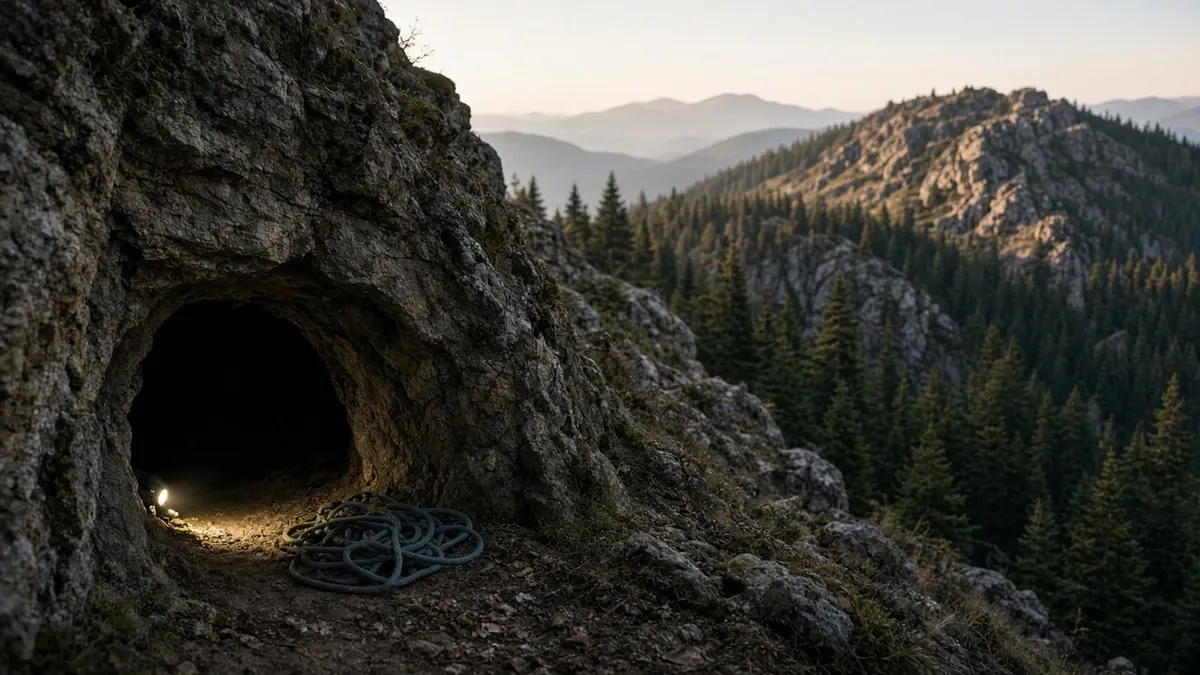
Speleologists have discovered a new vertical cave about 30 metres deep on Mount Smotrych in the Chornohora range of Ukraine’s Ivano-Frankivsk region. They named it “Dzembronia” after a nearby village, Yurii Kasian, vice president of the Ukrainian Speleological Association, told Ukrinform.
“We believe this cave could become the deepest in the Carpathians. Its depth reaches 30 metres, maybe even more. That is quite a lot for Carpathian sandstone caves,” he said.
How they got down
The association described the expedition in a report covered by the regional outlet IfNews. On the first attempt, the scouts went down without specialist equipment and reached a depth of about 16 metres. There a vertical shaft blocked the way, and continuing without a rope was too risky.
Two weeks later the team came back fully equipped. But at 25 metres the rope ran out, and the way ahead was a narrow crack. The cavers cleared a rockfall, got into the continuation of the cave and reached yet another shaft. The cave kept going, but they had no rope left. Nobody, the association admits, had expected so many vertical sections. Photos published with the report show the team squeezing through narrow rock passages and descending vertical shafts.
Why it is interesting
Caves in the Carpathians are mostly formed in sandstone, and deep ones are rare, which is why, according to Kasian, 30 metres is already a lot for such a cave. Dzembronia has not been fully explored, so only future expeditions will show how deep it really goes. “We will keep exploring it,” he said.
A find in the Ternopil region
A second discovery was made elsewhere in western Ukraine, in the “Na Khomakh” gypsum cave near the village of Kryvche in the Chortkiv district. There, researchers found a new section about 50 metres long.
Kasian said speleologists have known about the cave since 1960, and local people for much longer. It was considered small, at 140 metres. But about two kilometres away lies the Kryshtaleva (Crystal) cave, more than 20 kilometres long. The Ternopil regional tourism centre describes Kryshtaleva as one of Europe’s largest gypsum caves, with 23 kilometres explored and a 2.5-kilometre lit route open to visitors. It has been known since 1721 and stays at about 10.6°C all year round. Because Na Khomakh sits in the same rock massif, the researchers suspect it may be a fragment of a much larger system whose passages could stretch for tens of kilometres.
Summer-only work
There were three scientific expeditions to Na Khomakh this year. On the third, the team got through a narrow gorge, widened it by clearing stones and opened up the new passage, before hitting another narrowing. Work will resume after the winter: bats hibernate in the cave, so it can only be explored in the warm months.
In the already known part of the cave, tridents, Ukraine’s national symbol, have been spotted in several places. “We know that insurgents hid in many caves in the 1940s. Na Khomakh was probably a shelter for them too,” Kasian said.
What next
Neither cave has been fully explored. On Smotrych, the cavers need more rope and gear for the next shafts; in the Ternopil region, they have to wait for the next warm season.
Sources
This is an original short summary. All facts are as reported by the source below.
- Ukrinform: Speleologists discover new cave on Mount Smotrych in CarpathiansEN
- IfNews: Сюрпризи Чорногори — на горі Смотрич спелеологи відкрили нову печеру «Дземброня»UK
- УНІАН: Може стати найглибшою в Карпатах — на горі Смотрич відкрили нову печеруUK
- Тернопільський обласний центр туризму: Печера «Кришталева»UK

 More in: Life